
After postponing the session because of the heavy rain on Saturday, a group of us got together on Monday to sample the water in the Washbrook using the Trent Biotic Index. This is part of our continuing follow-up to the Saving the Saffron Brook project.
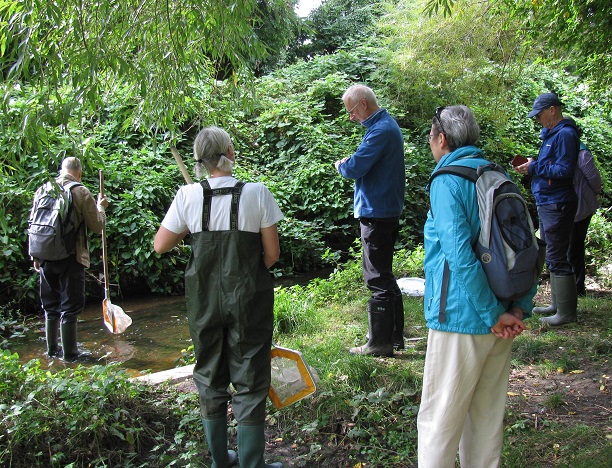
We use an approach where for 60 seconds we disturb the bed of the stream and capture whatever is picked up by the current in a net. This section of the Washbrook runs through a concrete canalisation, so there is not a lot of gravel or other materials on the stream bed, and it had been scoured by the fast flowing water after the rain on Saturday when the water level was too high and dangerous to do the sampling.
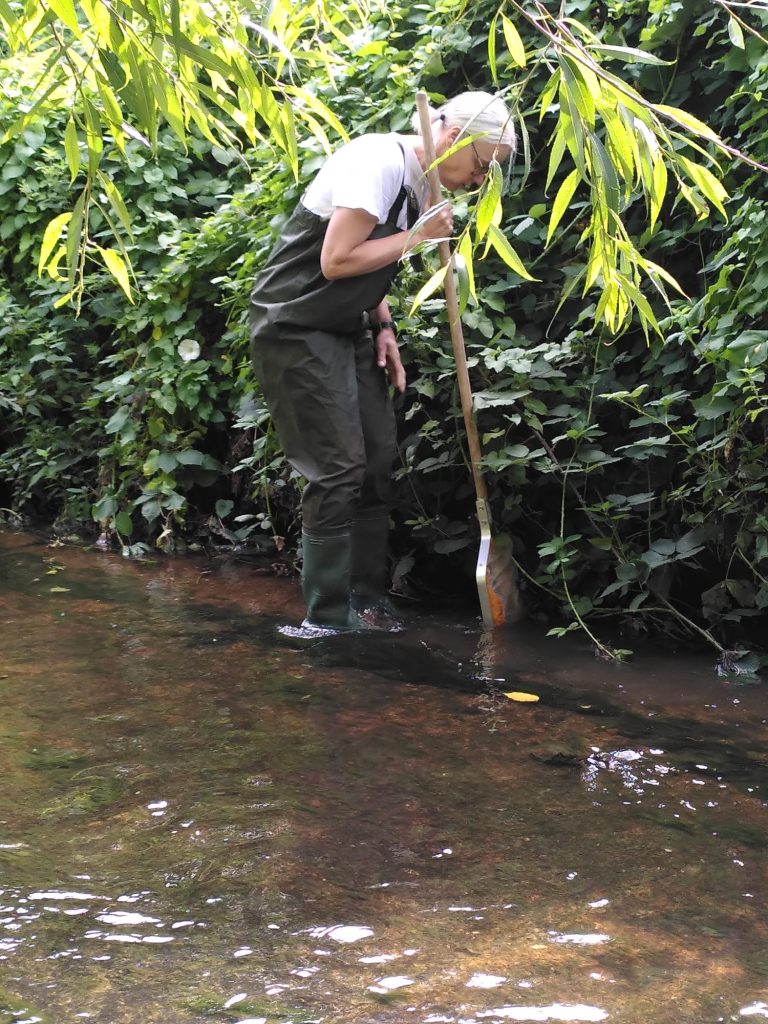
The photo shows Lis, one of the group, sampling the brook.
The net contents are turned out into a tray of water from the stream and we examine the contents to see what we can find.
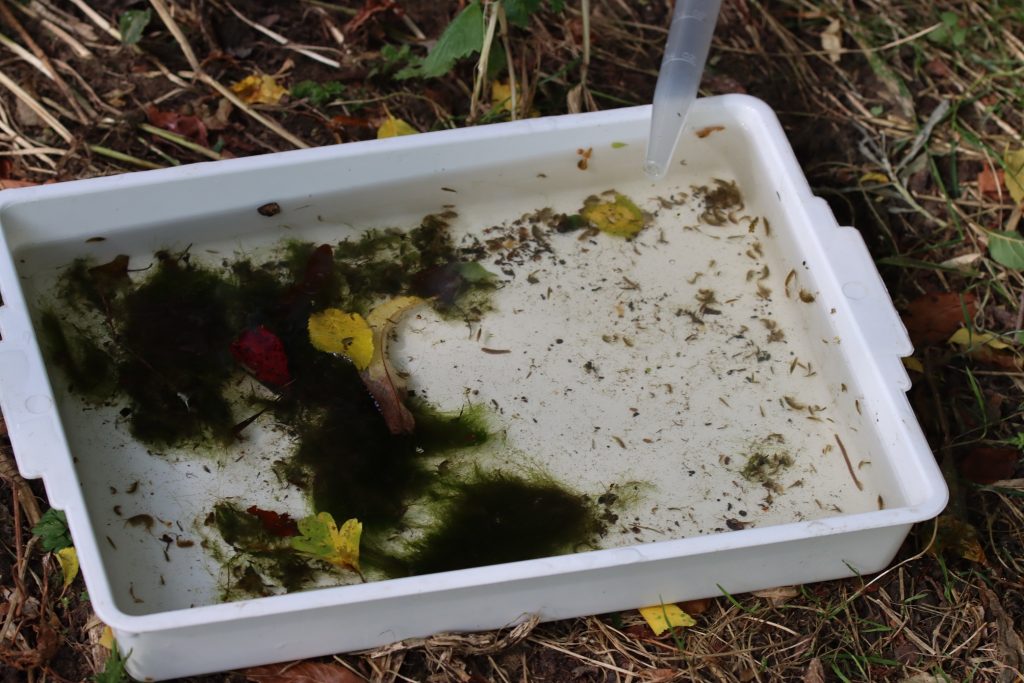
The aim of the Biotic Index approach is to find invertebrates from different groups, identifying them at species level if possible. Different groups get a score that depends on how resilient to or tolerant of pollutants they are, and the more species of a particular group the higher the score. Not all groups are counted, so although we saw leeches and midge larvae, they don’t count, whereas mayfly larvae do.
This photo shows a leech, a Gammarus freshwater shrimp, a midge larva and a mayfly larva swimming away from the camera.
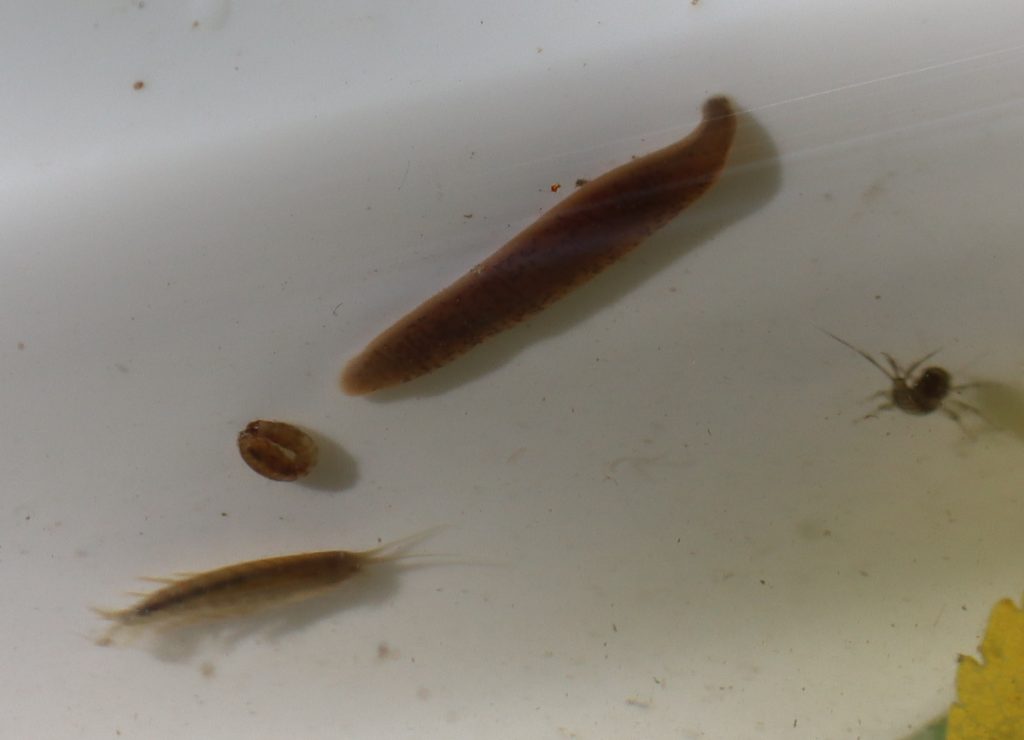
Mayfly larvae score a 5 unless the species is Baetis rhodani, in which case it’s a 4, which unfortunately was what we found.
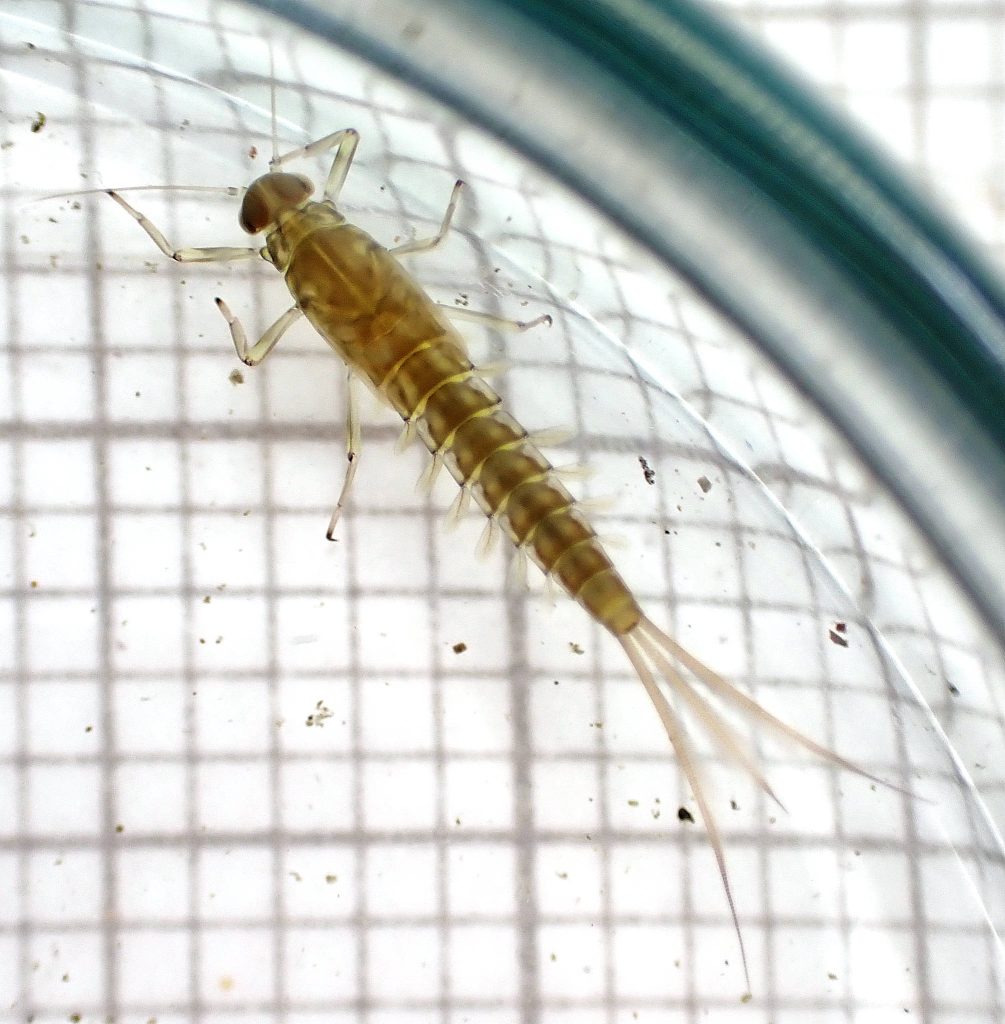
Of the creatures we found, the ones that count are the Gammarus shrimps, a member of the Asellus group of hog-lice (like underwater woodlice) and the mayfly nymphs.
Based on what we found, the brook gets a score of 4 out of 10. This is the same as at our last sampling exercise and the same as the brook scored last time in Knighton Park and the Washbrook Nature Reserve. It is unlikely that this will improve, unless the sewage works in Oadby stops discharging water into the brook and dog owners stop treating their pets with flea and tick treatments based on parasiticides like Imidacloprid and allowing them into watercourses.
Recent Comments