
Alan Cann talked at our October meeting about ‘The Little Things that Run the World’ and the massive decline in numbers of insects and other invertebrates. Here he covers some of that material and makes suggestions for what we can all do to help.
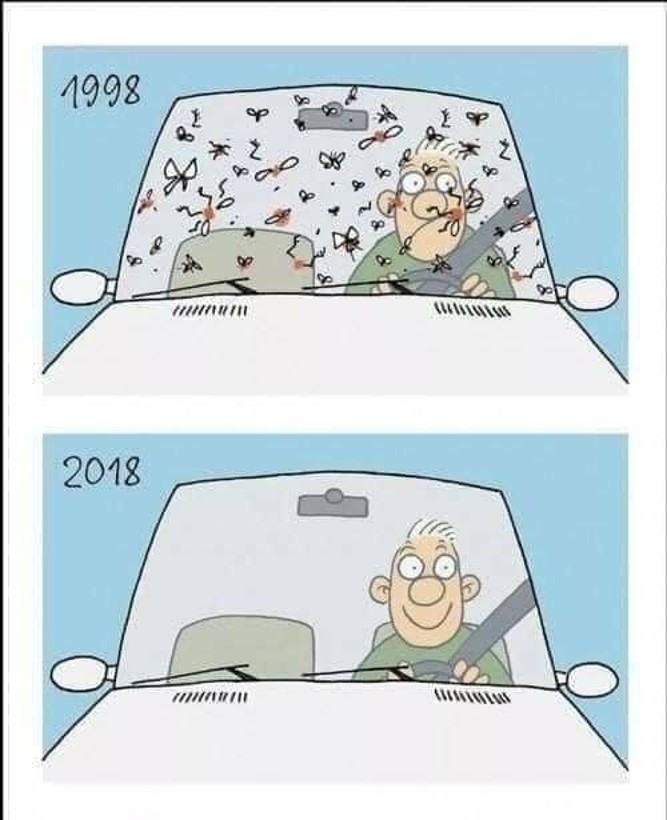
Most people have their own story about how there aren’t as many bees/butterflies/moths etc around as there used to be. There is also a large and growing mass of peer-reviewed scientific evidence which shows that insects have declined substantially worldwide.
You can read that evidence in this PDF  .
What are the reasons?
There’s no one single reason for insect declines – there are lots of causes, and the main ones are:
- Habitat loss & fragmentation
- Agricultural intensification
- Chemical use (pesticides, herbicides, industrial & household chemicals)
- The climate crisis
- Light pollution, invasive species, disease, etc.
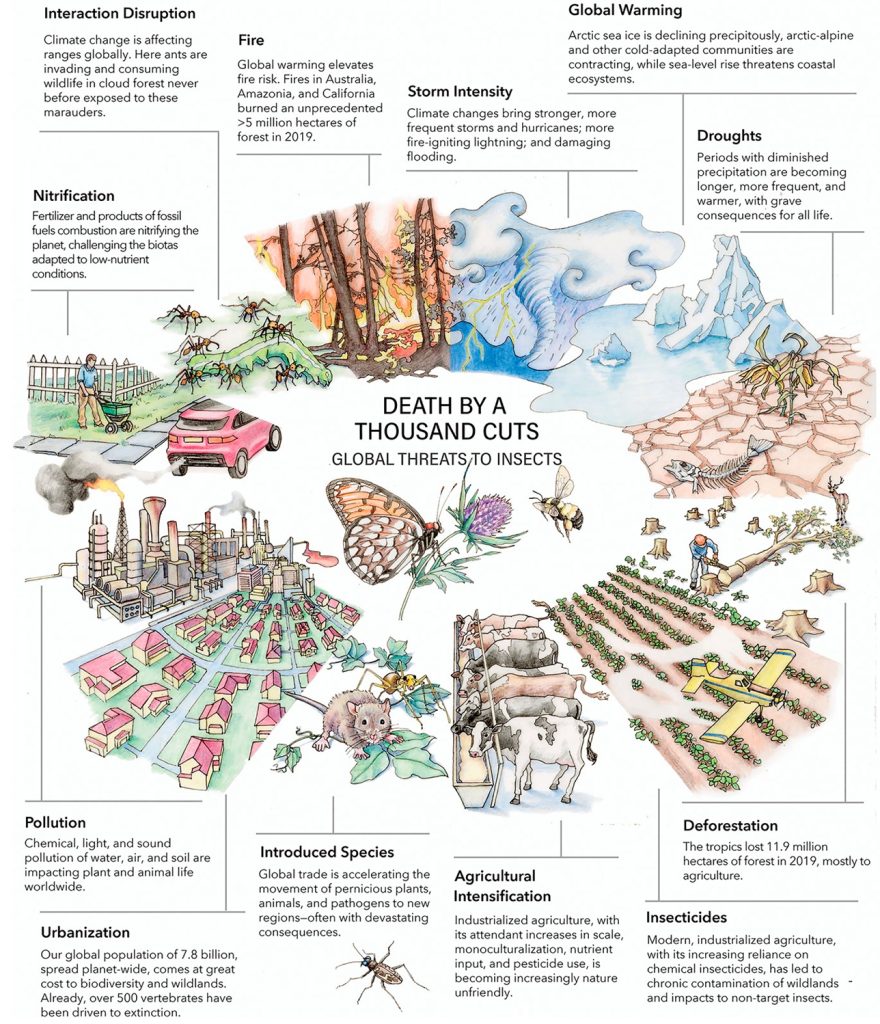
(Insect decline in the Anthropocene: Death by a thousand cuts. (2021) PNSA USA, 118(2), e2023989118.)
What are the consequences of loss of insects?
Insects are at the base of the food web and perform ecological services nothing else can replace. Roughly three quarters of flowering plants and about a third of the crops we eat depend on animal pollination, dominated by insects. Pollinator loss also threatens wild plants first, and each plant species lost takes others down with it. Pollination services have been valued in the hundreds of billions of dollars a year globally, and natural pest control adds tens of billions more. These losses fall hardest on smallholder farmers in the tropics who cannot afford to buy managed hives or spray more. There are also public-health angles: flies, beetles and mites that consume dung and carrion suppress disease vectors, so a decomposer collapse can worsen sanitation. Insects are the protein engine of terrestrial ecosystems. Birds, bats, frogs, lizards, fish and small mammals eat them in enormous quantities, and the declines in many bird populations are now partly traced to the decline of the insects they feed their chicks. Most pest insects are kept in check by other insects: parasitic wasps, ladybirds, lacewings. A weakened natural-enemy community means more pesticide use, higher costs, and boom-and-bust outbreaks.
The deep worry is less any single collapse than the fact that insects are the redundancy of the biosphere: millions of small, interconnected jobs done by many different workers. Removing most of the workers at once has no precedent, and systems that lose redundancy tend to fail suddenly rather than gradually.
What can YOU do about it?
- Be mindful about your choices.
- Make your garden, balcony/window box or parks and community spaces more insect-friendly – plant native flowers, provide nesting habitat, leave some leaves and dead wood, and create small ponds where safe and appropriate.
- Avoid pesticides and herbicides use.
- Tolerate some messiness – let some of the grass grow longer and mow less often to create a mosaic of varied habitats. Leave autumn leaves to decompose and provide crucial over-wintering habitat.
- Remove unnecessary outdoor lights which cause disruption to nocturnal insects.
- Cut your transport emissions and support policies that address climate change.
- Reduce the carbon footprint of your diet and buy local food from lower-pesticide or organic systems when feasible. Don’t buy imported food flown in from other continents.
- Read: How bad are bananas?: the carbon footprint of everything. Berners-Lee, M. (2011) Greystone Books. ISBN 1553658329. Provides the information needed to make carbon-savvy purchases and informed lifestyle choices and to build carbon considerations into everyday thinking.
Insects need places to live, food throughout the whole year (not just in the summer), clean environments, and connected suitable habitat.
Hello,
I live opposite Knighton Park and have noticed a lack of flowering ‘weeds’ on the playing field next to Welford Rd.
I read that some councils have sprayed playing fields with growth retardants to save money (less cutting) as the grass is very short & I haven’t seen any flowering ‘weeds’ – until recently when I noticed exactly where the former tennis courts were, there were 100s of dandelions where retardant probably hadn’t been used.
So I just wondered if anyone knows about council policy on use of growth retardants & about their negative impact on biodiversity. Aside from the issue of food for insects, there used to be sparrows, greenfinches & linnets feeding on seeds on that playing field, no longer sadly.
Thank you