
People like simple stories portraying black or white alternatives. The natural world is rarely that straightforward…
David Nicholls, one of the founders of the NatureSpot website, gave the inaugural talk to Knighton Wild back in 2015. Following the Knighton Wild AGM in November, Dave updated his talk to tell us “What do 15 years of NatureSpot records tell us about the state of nature in Leicestershire?”.
Over its 15 year existence, NatureSpot has amassed nearly half a million records across Leicester, Leicestershire and Rutland. This mass of data can be used to demonstrate changes in the natural world, but the picture they reveal is not straightforward. When we walk around Knighton now we can see some of the changes – you wouldn’t have seen a Little Egret, a Red Kite or a Ring-necked Parakeet 15 years ago. When I moved to Knighton 30 years ago the chirping of the House Sparrows on the gutter outside my bedroom window used to wake me up in the morning. Now those sparrows are gone (although they persist on the west side of Welford Road and in Clarendon Park), but the ear-splitting squawks from the parakeet roost still wake me up.
It’s the same across all groups of plants and animals. Some species have suffered and their numbers are greatly reduced, while at the same time, we have new species that have appeared. The reasons behind these changes are complex – climate change, intensive agriculture, habitat loss, importations, and factors that we haven’t even thought of.
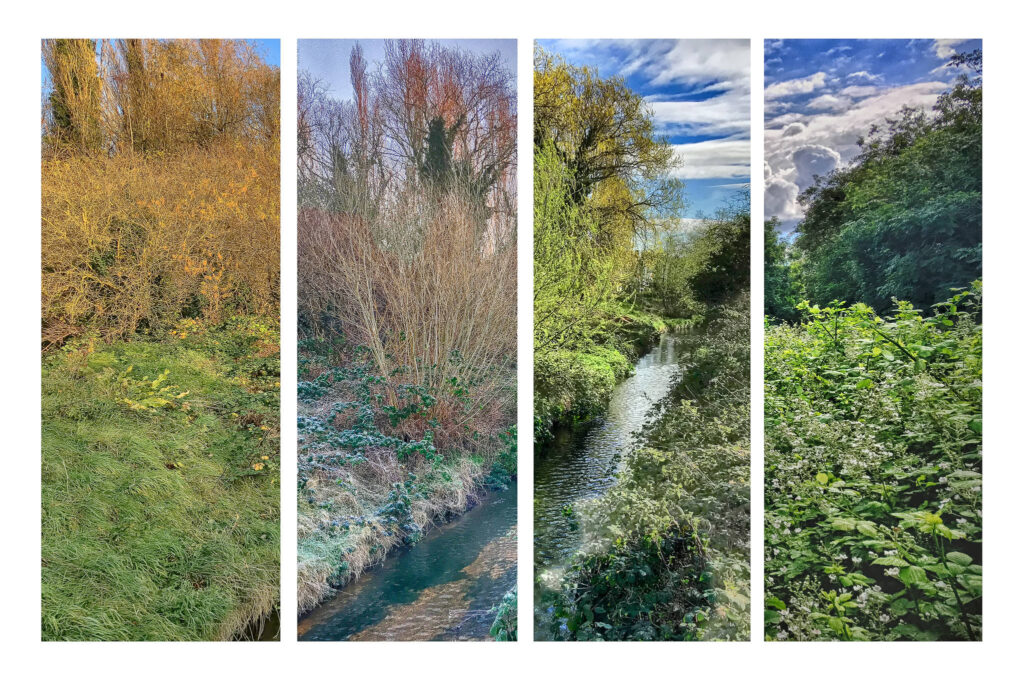
It is vitally important to understand these rapid changes which are happening in the natural world. The only way to do that is for “citizen scientists” – i.e. US – to get out there and record them. Knighton page on NatureSpot lists over 1,600 species recorded in Knighton – https://www.naturespot.org.uk/Knighton_ward
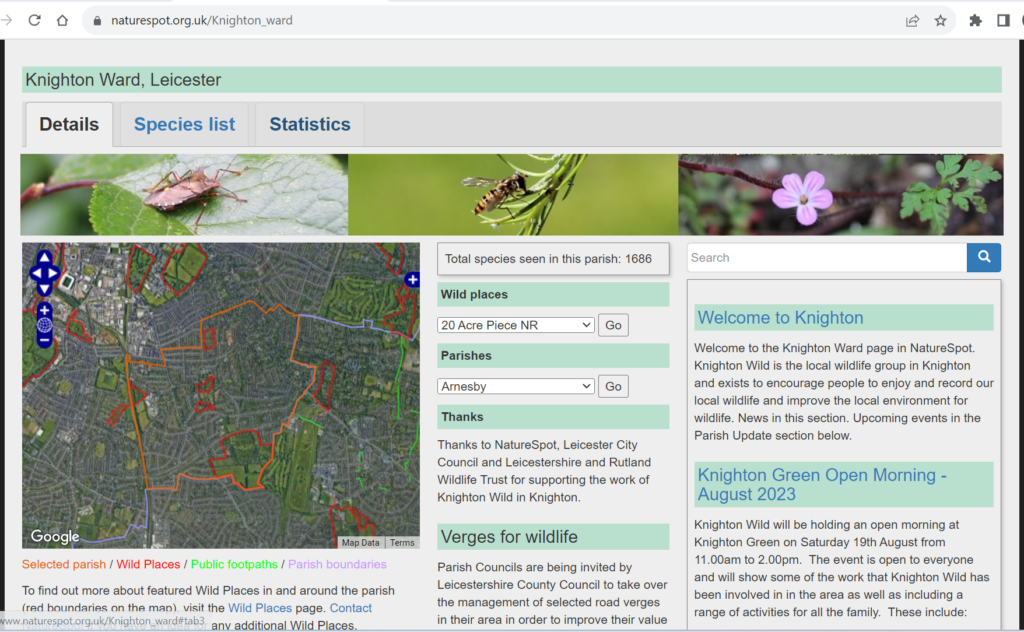
Make your contribution to our understanding of our local environment and the natural world.
Alan Cann, December 2023
Recent Comments