
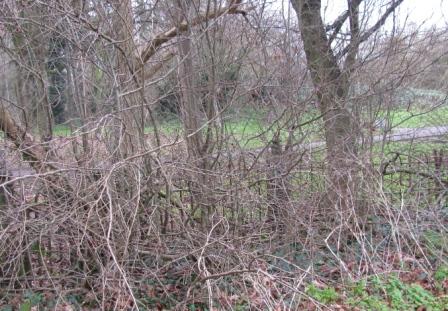
Hedgerows are an important habitat for wildlife providing food, nesting and hibernation sites for a large number of birds, insects and spiders. They also provide cover for species like voles, shrews and hedgehogs moving between feeding sites. They are a man made habitat. Over 200,000 miles of hedges were planted under the Enclosure Act and there was little change in the extent of these hedges between 1870 and 1945. Since then, due to changes in the nature of farming and construction of houses and roads they have been vanishing. The remaining hedgerows also need sympathetic management to prevent further loss. If a hedge has excessive trimming over a long period this can slowly kill it, whereas neglect can lead to an over tall ageing hedge. Both leave gaps at the base of the hedge and reduce its effectiveness as a wildlife habitat and stock-proof boundary.
A section of hedge in St Mary’s churchyard had become thin and straggly: it was ripe for renovation. First the hedge must be prepared by trimming the excess brash from the nearside of the hedge and clearing around the stems to be cut and laid. The brash is left on the far side of the hedge to stop any stock nibbling the re-growth or trampling the pleacher (stem that is cut and laid). All the stems are laid in the same direction. The stems are then cut through far enough that they will lower into place without forcing, leaving enough uncut to keep the tree alive. The trimmings can be woven into a ‘dead hedge’ and occasional stems can be left uncut to grow into ‘standards’ adding diversity to the range of habitats.
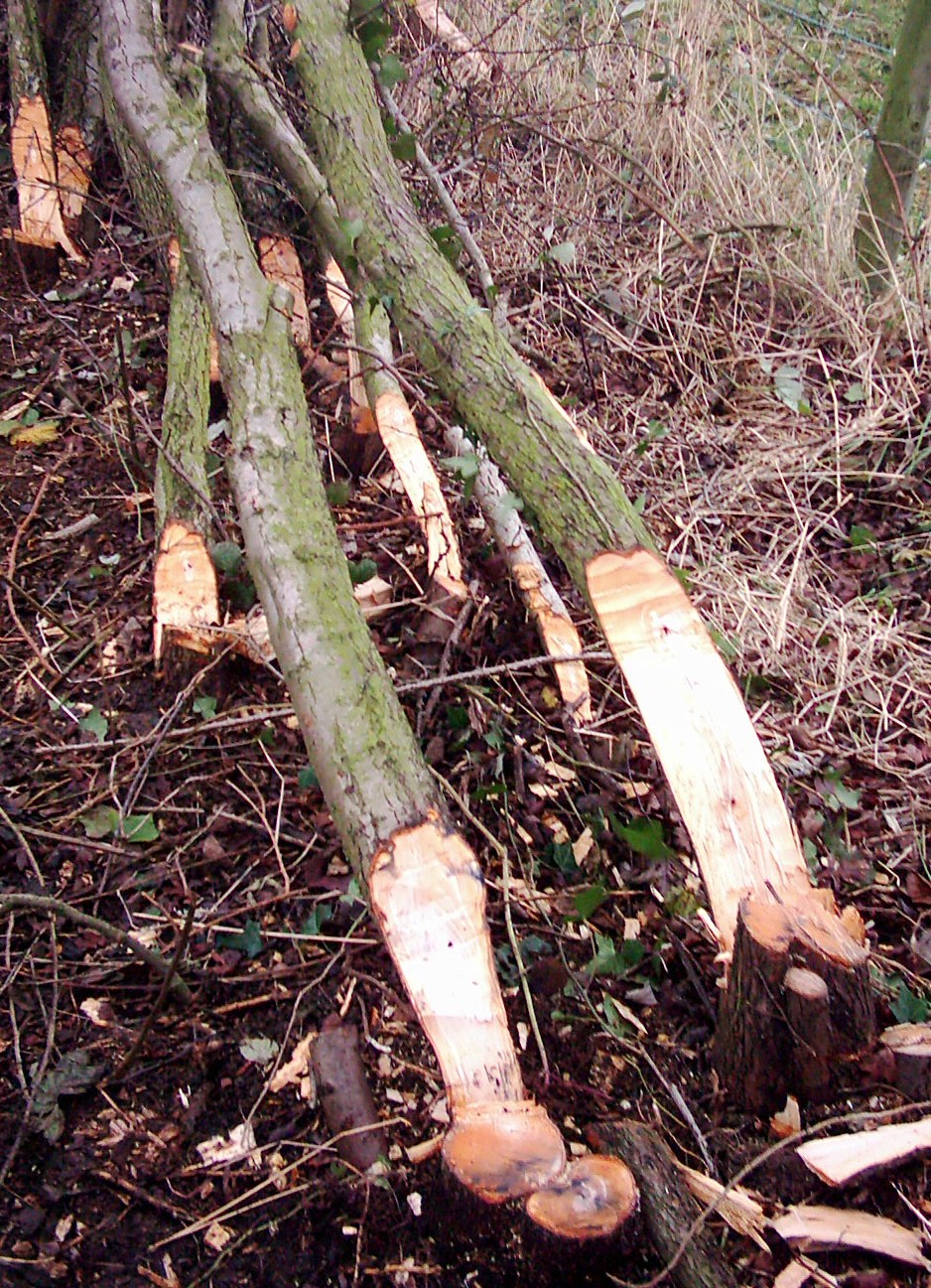
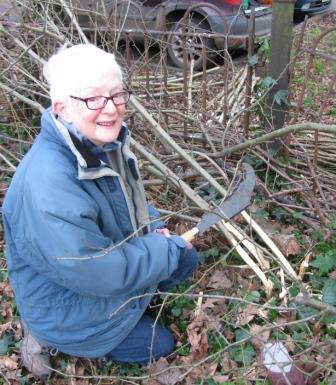
The cut will take time to harden and the pleachers are fragile at first so the hedge is staked and bound to keep them in place. Any gaps can be planted up with fresh whips. The stakes and binders used in the churchyard came from Launde Park Wood.

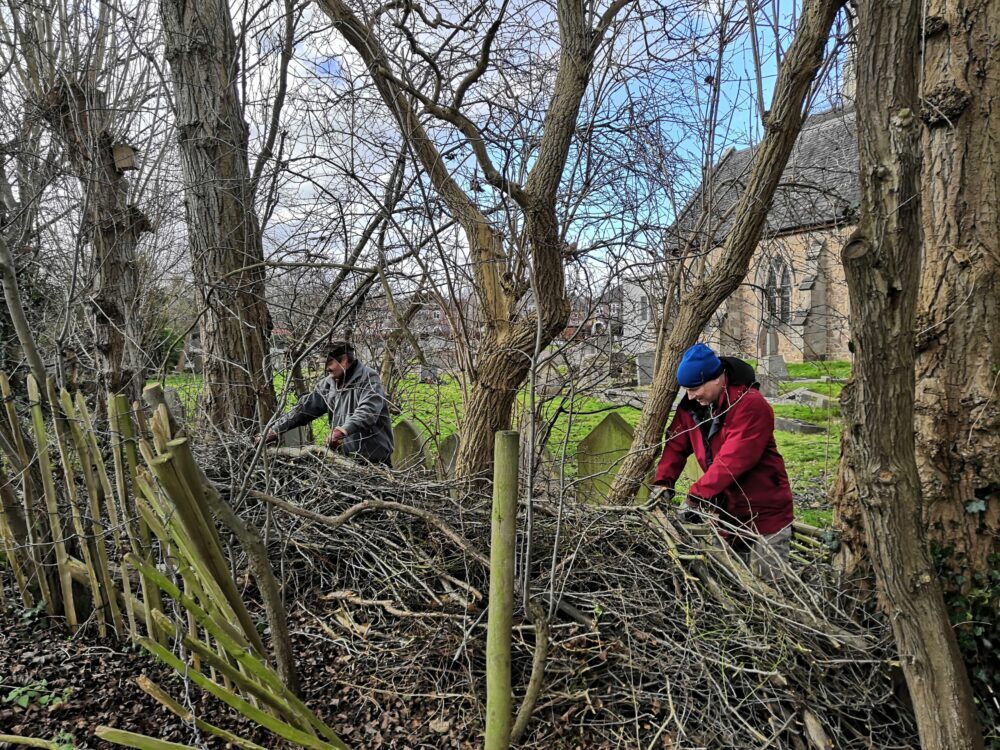
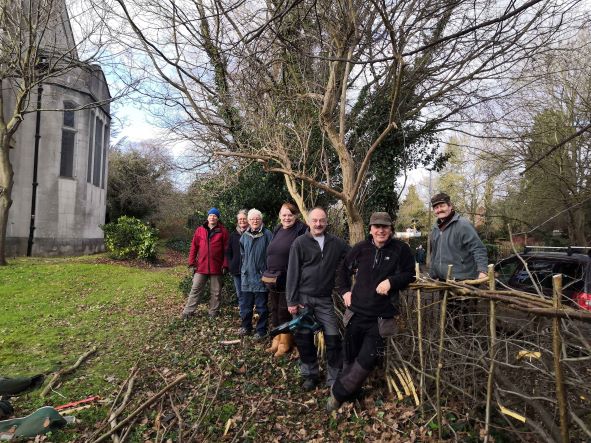
An intrepid band of members gathered in St Mary’s churchyard to have a go and learn the craft. They did a good job and laid a viable hedge which will regenerate over the next few years. New growth stemming from just below the hardened surface of the pleach will thicken the hedge at its base, and provide valuable urban habitat for wildlife. Well done all who helped. The remaining stretch of hedge will be laid over the next few weeks. so come and help!
Recent Comments