
The forthcoming Big Bug Weekend made me think about some of the bugs I have found in my garden in Knighton. In this piece, I’ll look at what a bug is, what shieldbugs are, what shieldbugs you might find in your garden, and what other insects there are around that might be confused with shieldbugs or bugs in general.
What is a bug?
The Americans use the term ‘bug’ to refer to just about any invertebrate (creature without a backbone), but the term ‘bug’ has a more technical meaning, as it refers to members of the order Hemiptera or ‘true bugs’.

Bugs are distinguished from other insects by the fact that their mouthparts are formed into a piercing beak or stylet, known as a rostrum. This means that they feed by inserting their rostrum into something and sucking the juices out as though through a straw. Most bugs are vegetarians, so they push their rostrum into the stem or leaf of a plant and suck out the sap. A few are carnivorous, such as the assassin bugs, which suck blood or parasitise other insects. You can see the rostrum folded away under this shieldbug nymph.
Another distinguishing feature of bugs is their life cycle. Unlike many insects, they do not go through a metamorphosis. So while the maggots of flies, the larvae of beetles and the caterpillars of butterflies and moths, for example, go through a stage where they form a pupa or chrysalis and change from the larval form into the adult form, bugs don’t do this.
 Bugs hatch from the egg as nymphs, which look different from the adults, and then go though a series of stages, known as instars, shedding their skin and gradually becoming more and more like the adult form. The photos here show an adult Common Green Shieldbug (Palomena prasina) and a nymph in one of the early stages. The British Bugs website has some excellent charts showing the different instars.
Another feature that applies to most adult bugs is what gives them the scientific name for the order: Hemiptera, from the Greek for ‘half wing’. In many insects, such as bees and flies, the forewing is a membrane, crisscrossed with veins that give it structure. In some bugs the forewing is partially hardened and only the end part is membraneous, and this feature is usually visible, as in the Common Green Shieldbug in the photo above. However, this doesn’t apply to all bugs: Aphids, for example, have membraneous wings if they have wings at all.
What is a Shieldbug?
The Knighton Wild Big Bug Weekend is going to focus on the bugs people might find in their gardens and local green spaces, and shieldbugs are among the most obvious bugs. They are relatively large, many over one centimetre in length and often brightly coloured or patterned. Some are secretive and hide in the roots of plants, but many can be found on the stems or leaves of plants in the garden.
There are several families of shield-bugs: Pentatomoidea, Coreidae and Rhopalidae, plus a few others that have not been recorded in Leicestershire and Rutland. They get their name from their shape, which is typically like a shield. They usually have a hard, triangular scutellum, which covers the top of the wings, and then the hardened forewings. The photos here show typical members of the three families: Red-legged Shieldbug (Pentatoma rufipes), Dock Bug (Coreus marginatus) and Cinnamon Bug (Corizus hyoscyami).


Shieldbugs seen in Knighton
The gallery of images below shows shieldbugs that have been found in one garden in Knighton, with one exception – the Tortoise Bug (Eurygaster testudinaria ), which was found in Saffron Acres.
 Woundwort Shieldbug (Eysarcoris venustissimus)
 Common Green Shieldbug (Palomena prasina)
 Common Green Shieldbug (Palomena prasina) - The brown version
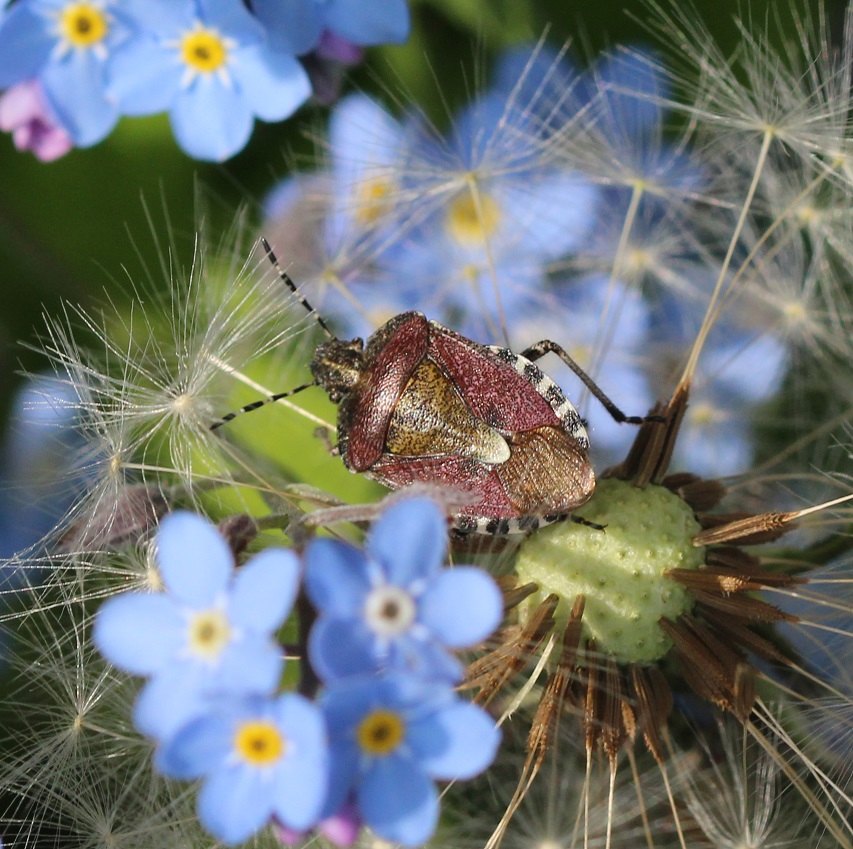 Hairy Shieldbug (Dolycoris baccarum)
 Tortoise Bug (Eurygaster testudinaria)
 Red-legged Shieldbug (Pentatoma rufipes)
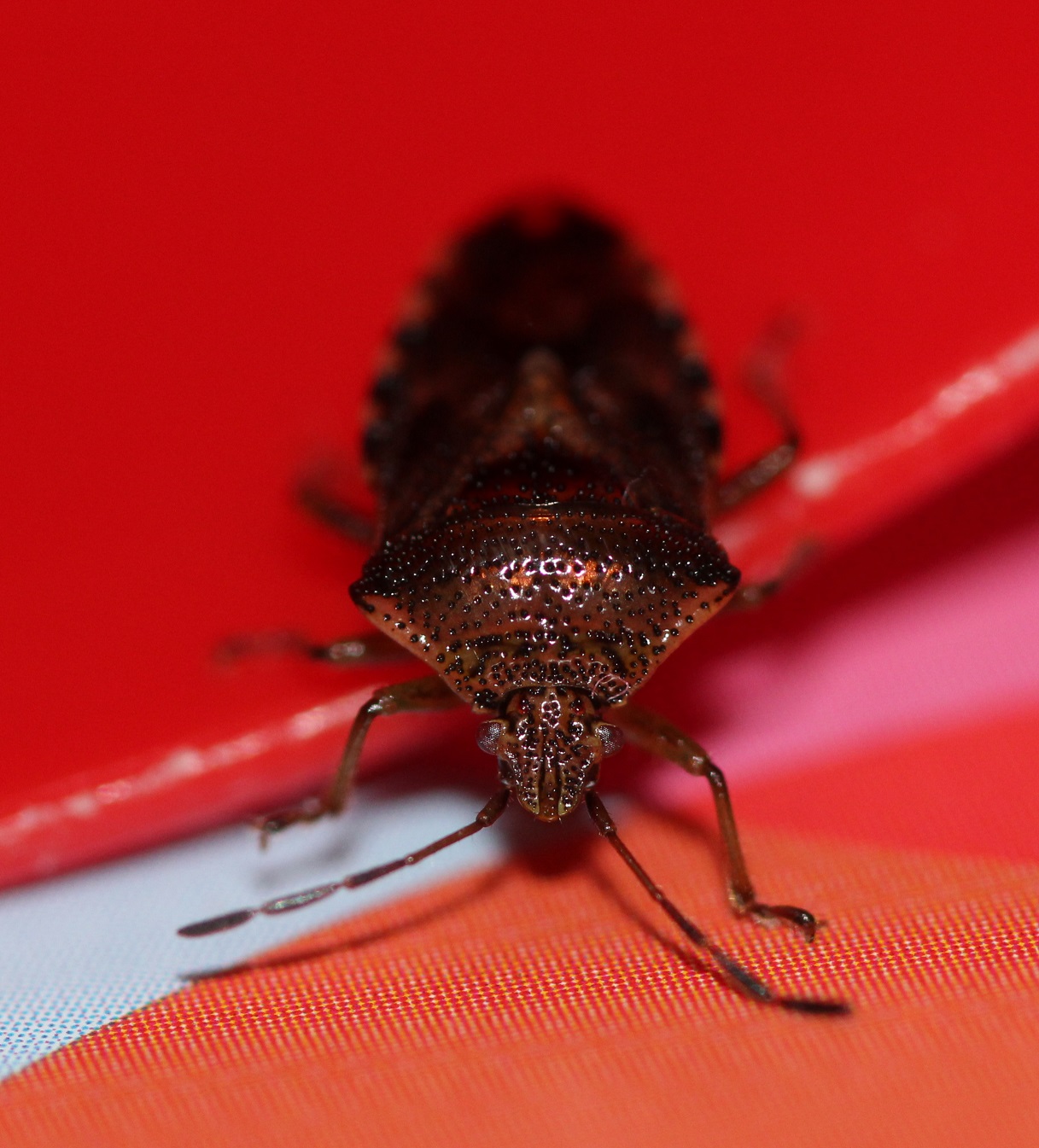 Parent Bug (Elasmucha grisea)
 Bordered Shieldbug (Legnotus limbosus)
 Forget-me-not Shieldbug (Sehirus luctuosus)
 Box Bug (Gonocerus acuteangulatus)
 Dock Bug (Coreus marginatus)
 Cinnamon Bug (Corizus hyoscyami)
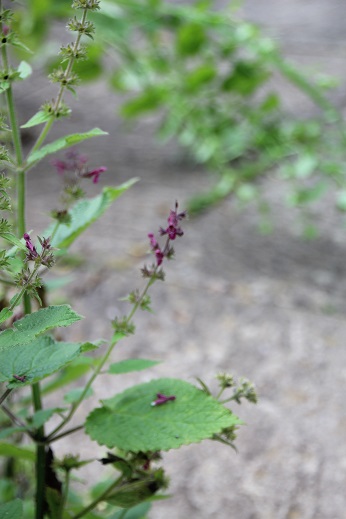
Most of these shieldbugs can be found on vegetation in the garden. Some are associated with particular plants. For example, the Woundwort Shieldbug (Eysarcoris venustissimus) is found on Hedge Woundwort (Stachys sylvatica), often known as stinkweed because of the smell when you pull it up. The nymphs tend to cluster round the developing seeds.

Similarly, Forget-me-not Shieldbug (Sehirus luctuosus) is associated with forget-me-nots and is usually found among the roots, while Bordered Shieldbug (Legnotus limbosus) is found around the roots of plants such as bedstraws (Galium sp) including Cleavers (Galium aparine), known as Goose-grass or sticky weed.
What else might you see?
There are plenty of other insects you might find while looking for shieldbugs. Some are bugs and some are members of other families such as beetles. Here are a few.
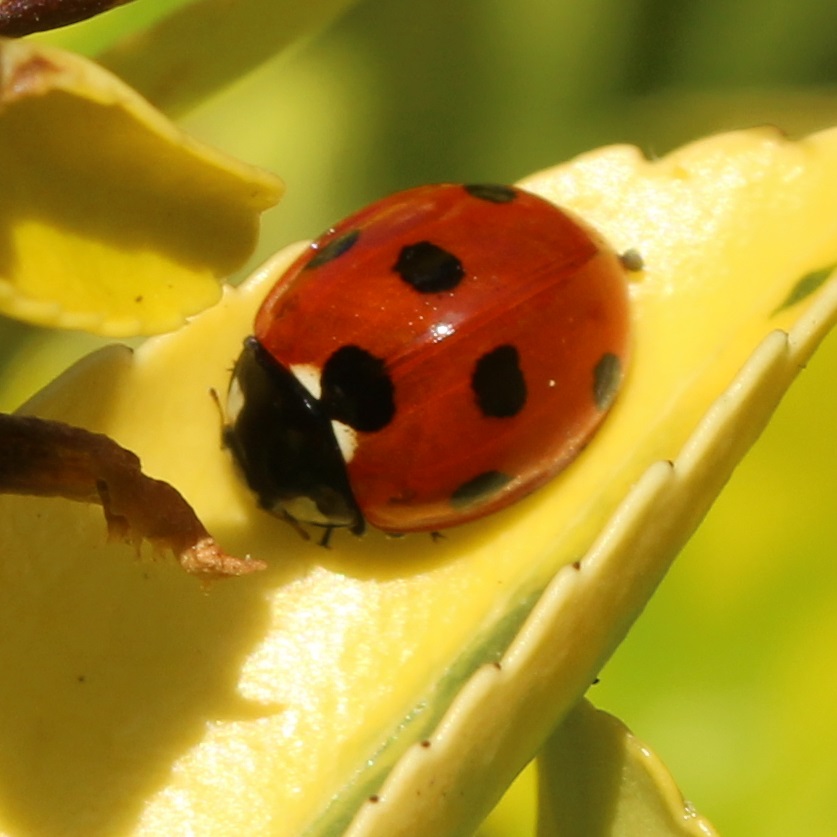 Seven Spot Ladybird (Coccinella septempunctata) (not a bug, a kind of beetle)
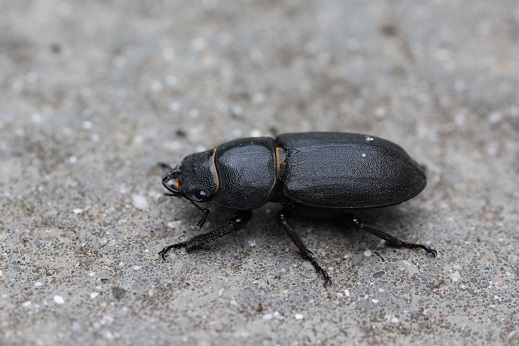 Lesser Stag Beetle (Dorcus parallelipipedus) (not a bug)
 Otiorhyncus armadillo (not a bug, a weevil, which is a kind of beetle)
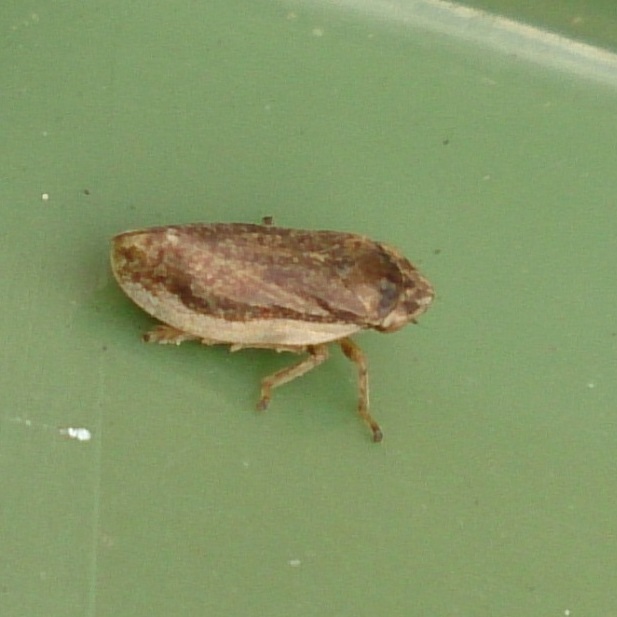 Common Froghopper (Philaenus spumarius) (a bug)
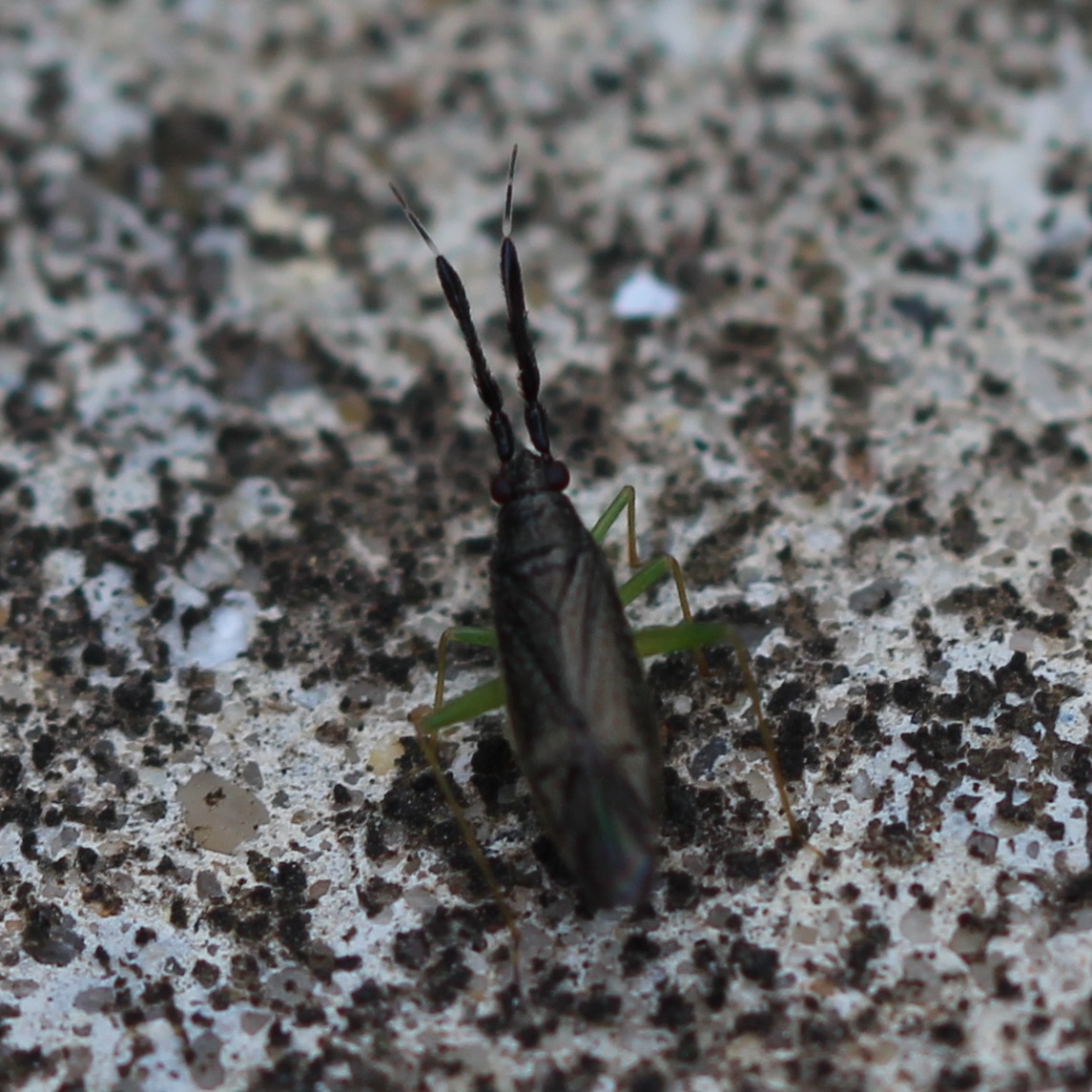 Heterotoma planicornis (a bug)
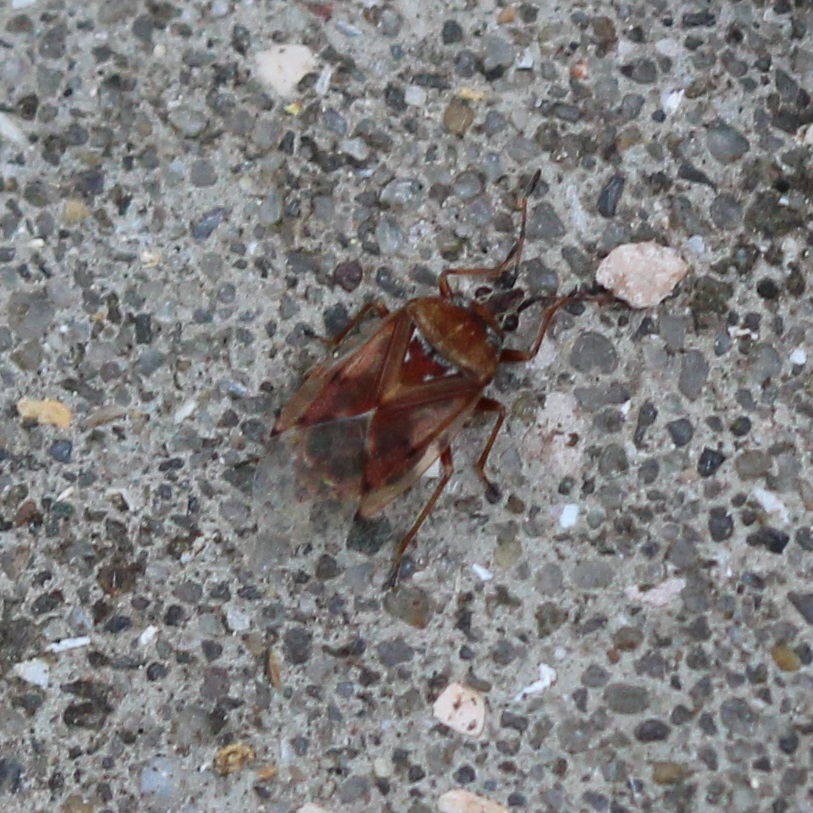 Birch Catkin Bug (Kleidocerys resedae) (a bug)
Common froghoppers are the source of cuckoo spit, the foamy covering the nymphs create for themselves on plants, and come in a variety of forms. Heterotoma planicornis is an interesting little bug with wide, feathery antennae. Birch Catkin Bug is another common bug found in gardens where there are birch trees.
Useful Links
The obvious place to look for information on bugs locally is NatureSpot. Here’s the link to shieldbugs, while here are bugs in general, which happen to start with shieldbugs.
The British Bugs website has a lot of information at a national level.
Recent Comments