
Not the TV series – ecological succession!
A successful wildlife garden (or nature reserve) aims to create a wide variety of ecological habitats so that a rich range of species can survive and prosper. This is possible even in a small space such as a garden because the plan is to create a mosaic – patches of varied habitat rather than big swathes of one thing. But habits are not constant over time – in fact, they change constantly. This process is called ecological succession – gradually, communities replace one another until a “climax community” – like a mature forest – is reached, or until a disturbance, like a fire, occurs. At one time Leicestershire was a bare landscape left by the retreating ice sheets. After thousands of years it was covered by forests – until humans cut them down. Our neighbourhood didn’t always look like it does today!
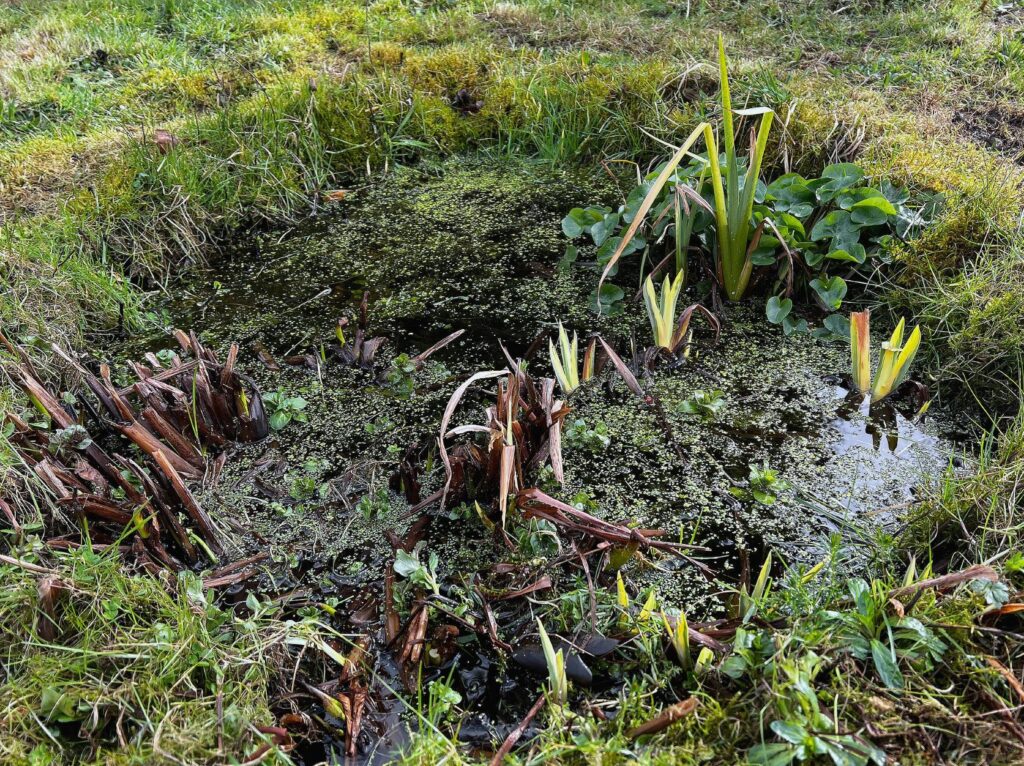
One of the most difficult decisions for a wildlife gardener is when to carry out maintenance on the pond. Sadly, there isn’t good time of year to do this – whenever you do it it is inevitable that some species will be disturbed. However, there is a way around the problem. Early on during lockdown I entertained myself by digging a small wildlife pond (about a metre long). Over the last three years this has been home to plentiful frogs, newts, dragonflies and damselflies, but now it is very choked with plants and there isn’t anything like as much water left as there was when I dug it out (meaning big temperature swings in winter and summer). This is the natural succession – ponds silt up and gradually become dry land unless they are kept open by livestock or human intervention.
I could clear my pond out, but frog and newt mating season is now in full swing, so I would disturb them, and all the dragonfly larvae from last summer will be hatching in a few months. So my answer is – a second pond! This one looks pretty bare at present, but the newts don’t seem to mind and have moved in already. The shiny new pond is at an early stage of the ecological succession, but when it has had a year to mature (and has accumulated all those over wintering dragonfly and damselfly larvae), then I can clear out my old pond (near the end of the ecological succession) and return it to the start of the process ready for next year. And anyway, you can never have too many ponds – even if they are only the size of a washing up bowl!
Alan Cann March 2023
Recent Comments